How to Build a Cold Data Archiving Strategy for Backups and Media Archives
- Kelsey Galarza

- 18 hours ago
- 10 min read
Data keeps growing. Backups, media files, project archives, compliance records, and historical datasets all need to be protected for years. But most of that data does not need to live on expensive, always-on storage.
That is where cold data archiving becomes important.
Geyser Data provides Buckets for Cold Data Archiving. These Buckets help organizations store long-term data with predictable costs, simple access, strong durability, and seamless integration with existing S3-compatible workflows.
A strong cold data archiving strategy helps you answer three important questions:
What data should we keep long term?
How much should it cost to store and recover?
How do we protect it from ransomware, deletion, and cloud cost surprises?
This guide explains how to design a cold data archiving tier for backups, media archives, and long-term retention.
What Is Cold Data Archiving?
Cold data archiving is the process of storing data that is important to retain but not accessed daily.

This data may include:
Backup copies outside the active recovery window
Completed media projects and raw production files
Legal, compliance, and audit records
Historical business data
Research, imaging, and large unstructured datasets
Cloud bucket data that needs a second protected copy
Cold data is different from active data. Active data needs fast access because teams use it often. Cold data needs long-term durability, cost control, and reliable retrieval when needed.
The goal is not just to make storage cheaper. The goal is to make long-term data easier to protect, manage, and recover.
Why Cold Data Archiving Matters
Many organizations store cold data in the wrong place. They leave it on primary storage, expensive cloud tiers, or backup platforms that were not designed for long-term retention.
That creates several problems.
Storage costs keep rising.
Egress and retrieval fees make recovery unpredictable.
Backups remain exposed to ransomware or accidental deletion.
Compliance data becomes harder to manage over time.
Media archives become too expensive to keep online.
A purpose-built cold data archive helps solve these problems.
Geyser Data Buckets are designed for long-term data retention with cloud simplicity and predictable economics. They allow organizations to preserve important data without paying premium prices for data that is rarely used.
The Key Requirements for a Cold Data Archiving Strategy

A reliable cold archive needs more than low-cost storage. It should be designed around access, security, durability, and operational simplicity.
1. Predictable Cost
Cold data often grows into hundreds of terabytes or petabytes. Small pricing differences can become large budget issues over time.
The biggest surprise in many cloud storage models is not the storage rate. It is the cost of getting data back.
Egress fees, retrieval fees, API fees, and minimum storage periods can make long-term archives difficult to forecast.
Geyser Data Buckets help simplify this model with transparent pricing and no egress or retrieval fees. That means organizations can plan archive costs without worrying that a restore, audit, migration, or re-edit will trigger unexpected charges.
2. Amazon S3-Compatible Access
Modern IT teams already use Amazon S3-compatible workflows. Backup software, media archive tools, scripts, and cloud-native applications often support Amazon S3 as a standard interface.
A cold archive should fit into those workflows.
Geyser Data Buckets use an S3-compatible interface, making it easier to connect existing tools without rebuilding storage operations from scratch.
This matters because archive projects succeed when they are simple to adopt. Teams should not need new processes, custom development, or a complex migration just to move cold data into the right tier.
3. Strong Data Protection
Cold archives often contain some of an organization’s most valuable data. That includes historical backups, business records, media assets, legal files, and regulated information.
This data needs protection from:
Ransomware
Accidental deletion
Insider threats
Cloud account compromise
Regional outages
Long-term media degradation
Geyser Data Buckets combine cloud-style access with tape-backed durability. Tape is well suited for long-term retention because it can provide strong isolation, low energy use, and dependable preservation for data that does not need constant access.
4. Recovery Without Cost Shock
A cold archive is only valuable if you can recover from it when needed.
Some cold storage services make retrieval slow, expensive, or complicated. That creates risk during a real recovery event.
For example, a ransomware incident may require large-scale restore. A media team may need to retrieve archived footage quickly for a new project. A compliance team may need records for an audit.
In each case, recovery should be predictable.
Geyser Data Buckets are designed to help organizations retrieve archived data without egress or retrieval fees, reducing the financial uncertainty that often comes with long-term cloud storage.
Choosing the Right Geyser Data Bucket
Geyser Data provides Buckets for Cold Data Archiving. Geyser Data Buckets help organizations store, protect, and retain cold data with a simple, cost-effective approach designed for long-term value.
A Geyser Data Bucket is a strong fit for data that no longer needs to live on expensive primary storage but still needs to remain durable, accessible, and protected. Organizations can use Geyser Data Buckets to reduce storage costs, simplify archive operations, and keep long-term data under control.
Use a Geyser Data Bucket for:
Recent backup archives
Business archives
Departmental file archives
Media and entertainment repositories
Long-term project data
Historical backup sets
Research archives
Finished media assets
Compliance and retention records
Data retained for legal, regulatory, or business reasons
The right cold data strategy starts by identifying which data is no longer active, how long it must be retained, and how often it may need to be accessed. From there, Geyser Data Buckets provide a practical way to move that data into a lower-cost archive model while maintaining durability, security, and operational simplicity.
For organizations that also need added protection for data already stored in cloud object storage, Cloud Sync can extend Geyser Data’s archive strategy by creating a second, independent copy of cloud bucket data with automated replication, delayed delete protection, and restore flexibility.
Common Use Cases for Cold Data Archiving
Backup Archive Tier
Backup teams need to retain more data for longer periods, but keeping every backup copy on expensive storage is not sustainable.
A cold archive tier allows teams to move older backups into a lower-cost, durable storage model while keeping recent backups on faster systems.
This approach helps reduce cost while preserving recovery points for compliance, business continuity, and cyber resilience.
Media and Entertainment Archives
Media organizations generate massive amounts of data. Raw footage, final cuts, renders, project files, and audio assets can quickly become expensive to store.
Most finished projects are not accessed every day. But when a customer asks for a re-edit, licensing opportunity, or remaster, that data needs to be available.
Geyser Data Buckets help media teams retain valuable content while reducing the cost of long-term storage.
Compliance and Legal Retention
Many organizations must retain data for years. Healthcare, finance, government, legal, and enterprise IT teams often face long-term retention requirements.
A cold data archive helps keep this information durable, organized, and recoverable while avoiding unnecessary primary storage cost.
Cloud Bucket Protection
Cloud object storage is widely used, but cloud data still needs protection. Data stored in a cloud bucket can be exposed to ransomware, accidental deletion, misconfiguration, or insider risk.
This is where Cloud Sync can add value.
Cloud Sync is an optional extension for Geyser Data Buckets. It creates a second, independent copy of cloud bucket data for added protection and resilience. It supports use cases such as ransomware protection, delayed delete, multi-cloud recovery, and low-cost cloud data protection.
How Cloud Sync Extends a Cold Data Archive
Cloud Sync is useful when organizations want to protect data that already lives in public cloud buckets.
It can automatically replicate new or changed objects from supported cloud buckets into Geyser’s protected archive environment. Deletes can be delayed for a customizable period, giving teams a recovery window if files are removed by mistake or affected by ransomware.
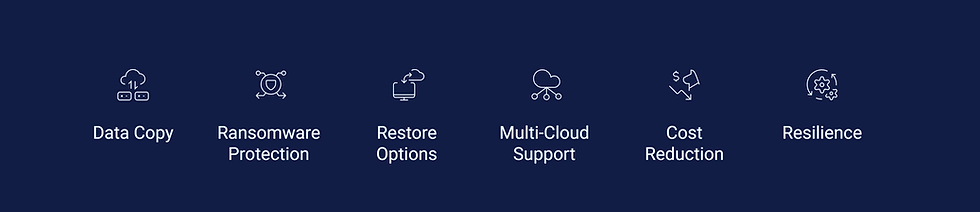
Cloud Sync can help organizations:
Create a second independent copy of cloud data
Protect against ransomware and accidental deletion
Restore to the original bucket or another bucket
Support multi-cloud recovery and migration
Lower the cost of cloud data protection
Add resilience without manual archive workflows
Cloud Sync should not replace a full data protection strategy. Instead, it strengthens one by adding an affordable, independent copy of cloud bucket data.
How to Design a Cold Data Archiving Strategy
Step 1: Identify Cold Data
Start by finding data that is important but rarely accessed.
Look for:
Backups older than 30, 60, or 90 days
Completed projects
Archived media files
Compliance data
Old file shares
Research data
Cloud buckets that need independent protection
The goal is to separate active data from long-term data. Active data belongs on fast storage. Cold data belongs in a purpose-built archive.
Step 2: Define Access Requirements
Not all cold data has the same recovery need.
Ask:
How often will this data be accessed?
How quickly does it need to be retrieved?
Who needs access to it?
Is it needed for compliance, recovery, or business reuse?
What happens if retrieval takes longer than expected?
These answers help determine whether data belongs in an Instant Bucket, Flex Bucket, or Deep Bucket.
Step 3: Model the Full Cost
Do not evaluate cold storage by capacity pricing alone.
Include:
Monthly storage cost
Egress fees
Retrieval fees
API or request fees
Minimum retention charges
Migration cost
Operational overhead
A cold archive with low storage pricing may become expensive if retrieval is costly. Geyser Data Buckets help reduce this risk by removing egress and retrieval fees from the archive model.
Step 4: Connect Existing Tools
A successful archive should work with existing workflows.
S3 compatibility makes this easier. Many backup, media, and cloud tools already understand S3-compatible storage.
This allows teams to connect archive storage without a major operational redesign.
Step 5: Automate Data Movement
Manual archiving does not scale.
Use lifecycle rules, backup policies, or archive workflows to move data automatically based on age, project status, tags, or retention requirements.
For example:
Recent backups stay on faster storage.
Older backups move to a Geyser Data Bucket.
Completed media projects move to archive.
Compliance records move to long-term retention.
Cloud bucket data is protected with Cloud Sync when needed.
Automation reduces human error and keeps storage costs under control.
Step 6: Test Recovery
Never assume archived data is recoverable. Test it.
A good recovery test should confirm:
Data can be located
Data can be retrieved
Permissions work correctly
Recovery time meets business needs
Restored files are complete and usable
The process is documented
Cold data archiving is not just a storage project. It is part of business continuity.
Common Cold Data Archiving Mistakes
Mistake 1: Keeping Cold Data on Hot Storage
Hot storage is built for active workloads. It is usually too expensive for long-term retention at scale.
Moving inactive data to Geyser Data Buckets helps reduce cost while keeping data protected and accessible.
Mistake 2: Ignoring Egress and Retrieval Fees
Many organizations focus on the monthly storage rate and miss the cost of recovery.
This can become a major problem during a large restore, migration, audit, or media reuse project.
A predictable model with no egress or retrieval fees makes long-term planning easier.
Mistake 3: Treating Cloud Storage as a Backup
Cloud storage is not automatically protected just because it is in the cloud.
Cloud data can still be deleted, encrypted, overwritten, or misconfigured. For important cloud buckets, Cloud Sync can create a second independent copy with delayed delete protection and restore flexibility.
Mistake 4: Skipping Security Planning
Cold archives need access control, encryption, isolation, and recovery planning.
A good archive strategy should reduce risk, not just reduce cost.
Mistake 5: Never Testing Restores
If your team has never restored from the archive, the archive is unproven.
Regular restore testing builds confidence and helps teams respond faster when data is needed.
Sustainability and Cold Data Archiving
Cold data can consume large amounts of energy if it sits on always-on infrastructure for years.
Tape-backed storage can reduce energy use because data at rest does not require the same continuous power profile as disk-based storage. This makes it a strong fit for long-term archives, especially at large scale.
For organizations with sustainability goals, cold data archiving is not only a cost strategy. It can also support lower-power data retention.
Why Geyser Data for Cold Data Archiving
Geyser Data helps organizations manage long-term data with a simple, predictable, and durable archive model.
Geyser Data Buckets provide:
Cold data archiving built for long-term retention
S3-compatible access for existing workflows
No egress fees
No retrieval fees
Tape-backed durability
Strong isolation for archive data
Lower-power storage for inactive data
Bucket options for different access and retention needs
Optional Cloud Sync for second-copy cloud bucket protection
This gives IT, backup, media, and compliance teams a practical way to store more data for longer without letting archive costs become unpredictable.
Final Takeaway
Cold data is not useless data. It is valuable data that does not need to live on expensive active storage.
Backups, media archives, compliance records, and historical datasets all need a storage strategy that balances cost, protection, access, and long-term durability.
Geyser Data Buckets help organizations build that strategy with predictable pricing, S3-compatible workflows, no egress or retrieval fees, and tape-backed cold data archiving designed for long-term value.
For organizations that also need a second protected copy of cloud bucket data, Cloud Sync adds automated replication, delayed delete protection, and flexible restore options across buckets, regions, and cloud environments.
The result is simple: lower storage cost, stronger data protection, and better control over long-term data.
FAQs
What is cold data archiving?
Cold data archiving is the process of storing data that is rarely accessed but still needs to be retained. This includes backup archives, media files, compliance records, historical data, and long-term project files.
What are Geyser Data Buckets?
Geyser Data Buckets are S3-compatible cold data archiving targets that help organizations store long-term data with predictable pricing, strong durability, and no egress or retrieval fees.
What data should go into a cold archive?
Cold archives are best for data that is important but inactive. Examples include older backups, completed media projects, legal records, compliance data, research archives, and cloud bucket data that needs long-term protection.
Why are egress fees a problem for cold storage?
Egress fees are charges for moving data out of cloud storage. They can make restores, audits, migrations, and disaster recovery unexpectedly expensive. Geyser Data Buckets remove this concern with no egress fees.
How does Cloud Sync help protect cloud buckets?
Cloud Sync creates a second independent copy of cloud bucket data. It can support ransomware protection, delayed delete, flexible restores, and multi-cloud resilience.
Is cold data archiving useful for media companies?
Yes. Media companies often need to retain large volumes of footage, audio, renders, and project files. Geyser Data Buckets help preserve those assets without paying active storage prices for inactive content.
Is cold data archiving useful for backup teams?
Yes. Backup teams can use cold data archiving to retain older recovery points cost-effectively while keeping recent backups on faster storage.
Does Geyser Data support S3-compatible workflows?
Yes. Geyser Data Buckets are S3-compatible, which helps organizations connect existing backup, archive, and data management tools without major workflow changes.
What is the main benefit of using Geyser Data?
The main benefit is predictable, durable, and cost-effective cold data archiving. Geyser Data helps organizations retain valuable data for the long term while avoiding hidden retrieval and egress costs.
Comments